Just a few weeks ago, I arrived early in the morning to my bird banding site in northwestern PA. As my student assistants and I started to set up our nets, we noticed all sorts of debris in the vicinity. Branches were down, leaves and sticks were scattered and our nets were blown out of place. As we traveled farther in the forest, we came upon a large poplar tree that had been uprooted and overturned. Several other smaller trees became victims when the massive giant fell. It was obvious that a severe storm had blown through the area just the night before and it left a pretty big mess in its wake.
It wasn’t long before I heard some small chirps along the forest floor just below the fallen tree. I searched around carefully until I came upon two small nestlings (pictured here). The birds were only a few days old, with just a few pin feathers; they had no business being on the ground. I thought for a moment about how scared these birds must have been in the storm. I imagined them all tucked in their warm nest the evening before. Suddenly, the wind starts to pick up, the tree that held their nest starts to rock, the lightning and thunder boom all around, and the rain is relentless. All at once, the wind becomes too strong and the home they have known since they started to develop in the egg crashes to the floor. It is a violent, traumatic and overwhelming experience.
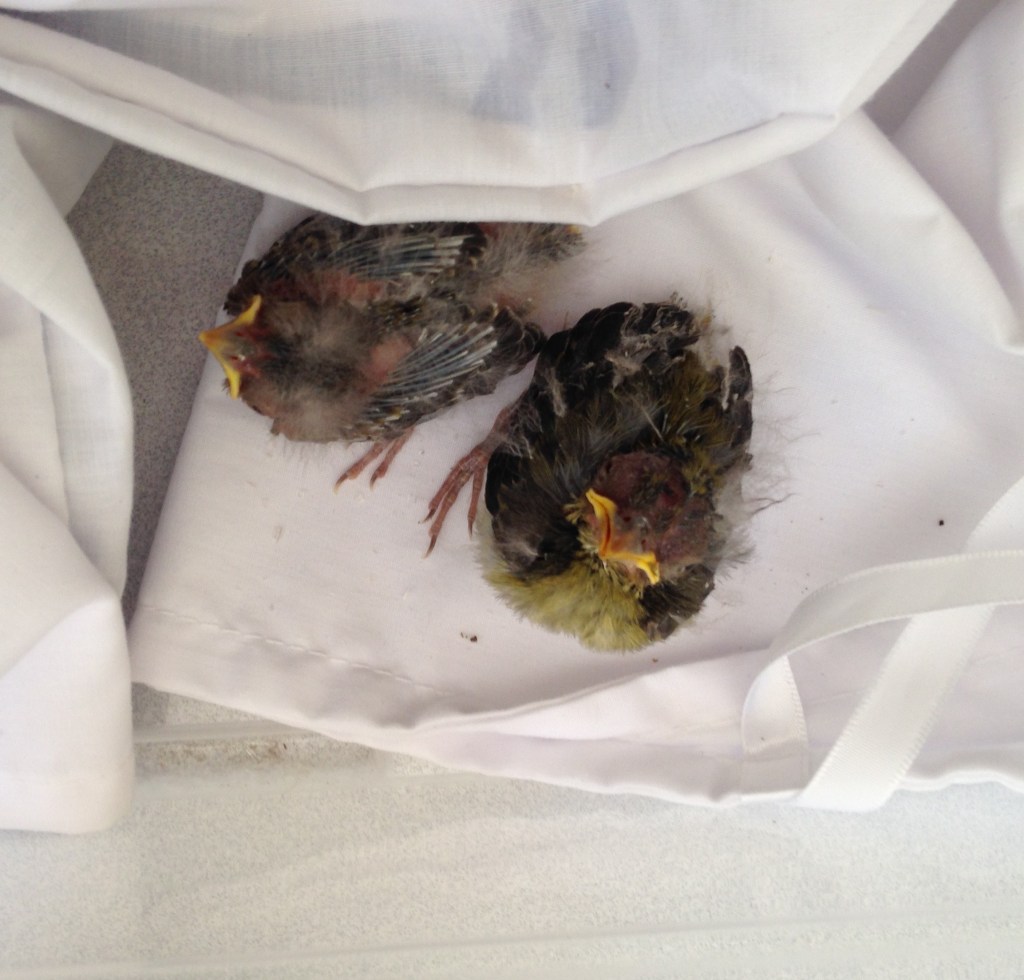
@ Guys Mills, PA
Although humans don’t often experience the sensation of falling out of a tree, we do know what it’s like to go through storms of both the literal and metaphorical sort. The metaphorical storms of our lives can hit without warning and can shake us up. These storms can feel overwhelming, test our strength and confidence, flood us with emotions, and leave us feeling afraid, helpless, and confused. I’ve experienced my own storm as of late. They aren’t fun. I have no doubt you can relate.
BUT (and there is always a but) all hope is not lost. I watched the two nestlings all morning that day. The parents of the chicks were still around, a bit confused themselves about what had happened and how to care for their young. I identified the parents as Scarlet Tanagers and my students and I searched for a nest, hoping we could find a way to reassemble it in a tree and place the chicks back in. We even scoured our banding supplies to try to find a way to fashion a temporary nest with what we had. Despite our efforts, we couldn’t find the nest and weren’t able to put together a substitute of any structural value. Although I always hate to remove a wild animal from capable parents, I knew the helpless birds wouldn’t survive for long on the ground even with two attentive parents close by.
So, I collected the birds, administered some emergency care and later that evening drove them an hour up the road to the closest wildlife rehabber that can properly care for baby birds. I have to admit that I asked myself several times if it was worth all the effort. It took a good bit of my time and energy for most of the day. I could have left the birds where I found them, knowing that sometimes nature is cruel. Survival of the fittest, as they say. I wouldn’t think ill of anyone who made that choice given the circumstances.
But on that day, I couldn’t do it; I couldn’t leave them there. Perhaps more for me than for the birds, I felt a need to extend some compassion in that moment. I felt the need to take what was a scary, unkind, and unfair situation and introduce a bit of goodness. Did my actions take away the trauma from the storm or change what had happened to those birds? No. Did taking the birds in to receive care suddenly “fix” all the damage of the night before? Certainly not. The reality is that we can’t run from the pain of our storms or pretend they aren’t real. And yet, even in the midst of them, we CAN find moments of joy.
Storms are scary, traumatic and painful. It is easy to focus on the negative in the midst of them. And still I believe that there are always opportunities to extend love, to extend compassion, to be kind. And somehow, I think, those small extensions ease the discomfort of the storm and negate some of the damaging impacts.
The two birds I pulled from the forest floor last summer grew to be healthy young birds ready for release under the careful care of their attentive licensed rehabilitator. For those two birds, the storm was not the end. They have a bright future. The same is true for you and me. Joy is possible even in dark places. The storm is not the end.
 Wisdom on Wings