One of the first things students in my avian ecology class learn are the orders and families of birds. I think it is important to understand the biological connections and interrelationships among different species and it helps to remember things that are similar. I’m always quick to note that some of my favorite birds fall in the order Pelecaniformes. These are the herons, egrets, and their kin that stalk prey at water’s edge. The great egret I captured here, frozen still in search of food in Lakeland, Florida, is one of the largest and most colorful species in this order of birds.
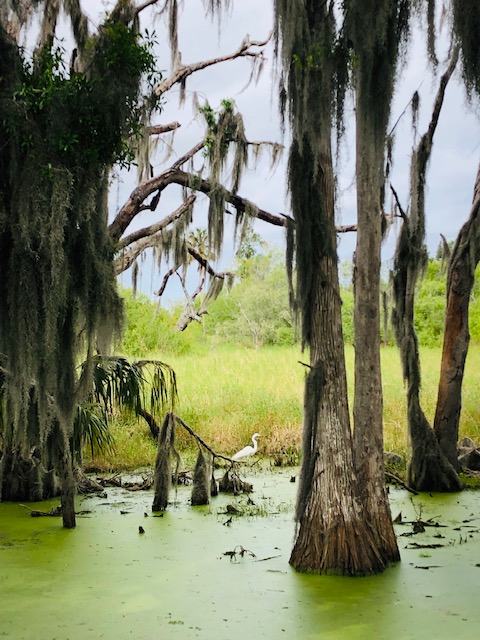
I grew up watching herons at my homeplace in North Carolina. A large pond beside my home provided hours of entertainment. Our pond was perfect for the many resident great blue herons that patrolled our local area. It was private and isolated, wasn’t overrun by vegetation, and well-stocked with fish, reptiles, and amphibians. The great blues would come early in the morning or late in the evening, just when the water was calm and the light dim, to meticulously wade and wait for the right moment to strike for a meal. I always marveled at their ability to be completely still, for extended periods of time, all to wait for the ultimate prize, a wholesome and satisfying meal.
The heron and egret are teachers of patience and exhibit this characteristic with skill. Unlike many birds that flit and flutter from one place and one moment to another, these guys are unusual in that they owe their survival to stillness and waiting. These birds may not be alone. I too am realizing in my own life that hurry and haste, as they say, “make waste.” There are indeed times in our lives when we must seize the day, making quick work or impulsive decisions. Yet more often than not, we are better served exercising endurance and fortitude instead of rashness and impatience. One of my favorite childhood characters, Winnie the Pooh, once reminded Christopher Robin that “we shall get there some day. Rivers know this: there is no hurry.” Winnie is right. Haste breeds the short-lived and transient, while patience provides room for enduring gifts. These gifts need time to grow and develop – they can’t be rushed. Just like the egret waiting in stillness by the water, there is beauty in the quiet space we grant for patience in our lives. It is a calm sense of hope that those things that feed our body and soul will come in due time – well-worth the wait.
 Wisdom on Wings