I have just returned from a memorable Alaskan adventure. My travel crew and I purposefully ventured to the 49th state in the height of summer, seeking to enhance our chances of favorable weather. The summer months bring plenty to this wild land – where near constant sunlight and warmer temperatures combine for a blooming bonanza of life. Humans are, by no means, the only creatures who travel north for the bounty of such dog days. Birds of all sizes and shapes journey from places near and far to exploit the abundant resources available to raise their young and fill their bellies.
Take the Arctic Tern, photographed here at the Mendenhall Glacier in Juneau, AK on my recent trip. New research has revealed that this tiny (4 oz) shorebird has the longest known migration of any animal in the world. It turns out that many of these impressive navigators travel complex zigzagging routes from Antarctica to Greenland every year (watch a simulated video of the trek here). Often living for 30 years, this means that an arctic tern might travel nearly 1.5 million miles (equivalent to three trips from the earth to the moon and back) over its lifetime.
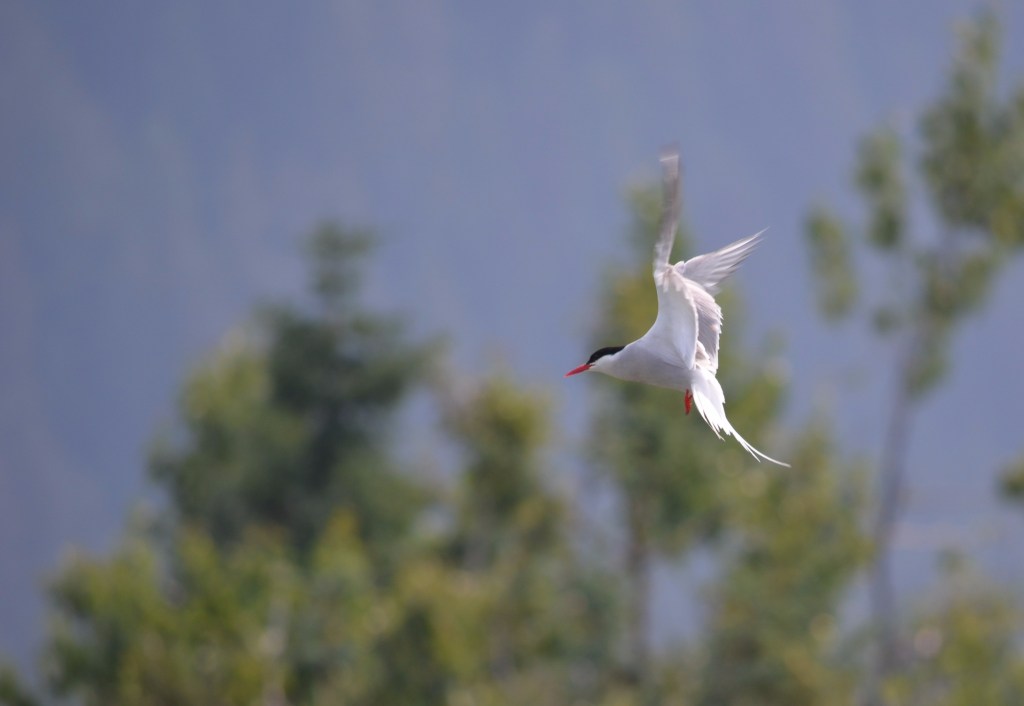
Although the photo I took of the charismatic tern featured here was captured on a warm and clear day in July, I can only imagine what this little bird must experience on other days out in the open ocean. In fact, it is far more likely that the clear blue skies that greeted us on this particular day are more of an aberration for the feisty tern. It isn’t a stretch to imagine that many of this bird’s days are spent alone on the high seas, surrounded by grey skies and pelted by chilling rain. Still, that one day of sunshine under which I witnessed this tern gave the impression of a carefree and easy-going existence. How effortless it was for me to daydream of the untroubled life this bird must live there in the middle of breathtaking Alaskan beauty.
But the fact of the matter is that any species that lives more than a few days on this planet likely experiences periods when gloom and darkness are more prevalent than blue skies – both literally and figuratively. I don’t know what an arctic tern experiences internally on sunless days, but for me, dark days feel heavy, imposing, and melancholy. In my own life as of late, these formidable 24 hour periods have been more constant than not. There is strange comfort knowing they likely represent a significant portion of the arctic tern’s existence as well.
And yet, there it was – glistening in the sunlight, soaring on the cool breeze, and enjoying the bounty of ocean life that bursts forth each summer – seemingly unconcerned with the dark days behind or ahead. This bird appeared to gaze upon the world with vigor, purpose, and enthusiasm. Of course, that doesn’t mean darkness isn’t just around the corner and it doesn’t mean gloom won’t return. But the great fortitude and resilience demonstrated by this four ounce migratory wonder in the face of the inhospitable high seas is a timely reminder that even in the midst of the darkest of days, blue skies just might be waiting ahead too.
 Wisdom on Wings