In certain parts of Alaska a confluence of ideal climate conditions, open water, and plentiful prey items support an abundance of America’s national bird – the bald eagle. In some spots bald eagles are so numerous that locals call them the pigeons of the north. Bald eagles amass in this part of the world in some of the greatest concentrations on earth. I was lucky enough to see many of them on a recent trip to the state – all stunningly beautiful like the two adults pictured here that I spotted while rafting the chilkat river in Haines, AK. For those of us from the lower 48, opportunities to see bald eagles in the wild are not nearly as common as they are in the far north. Just 30 years ago, sightings of eagles were quite rare throughout most of the U.S. Fortunately, over the past decade, eagle populations have recovered thanks to protections from the Endangered Species Act.
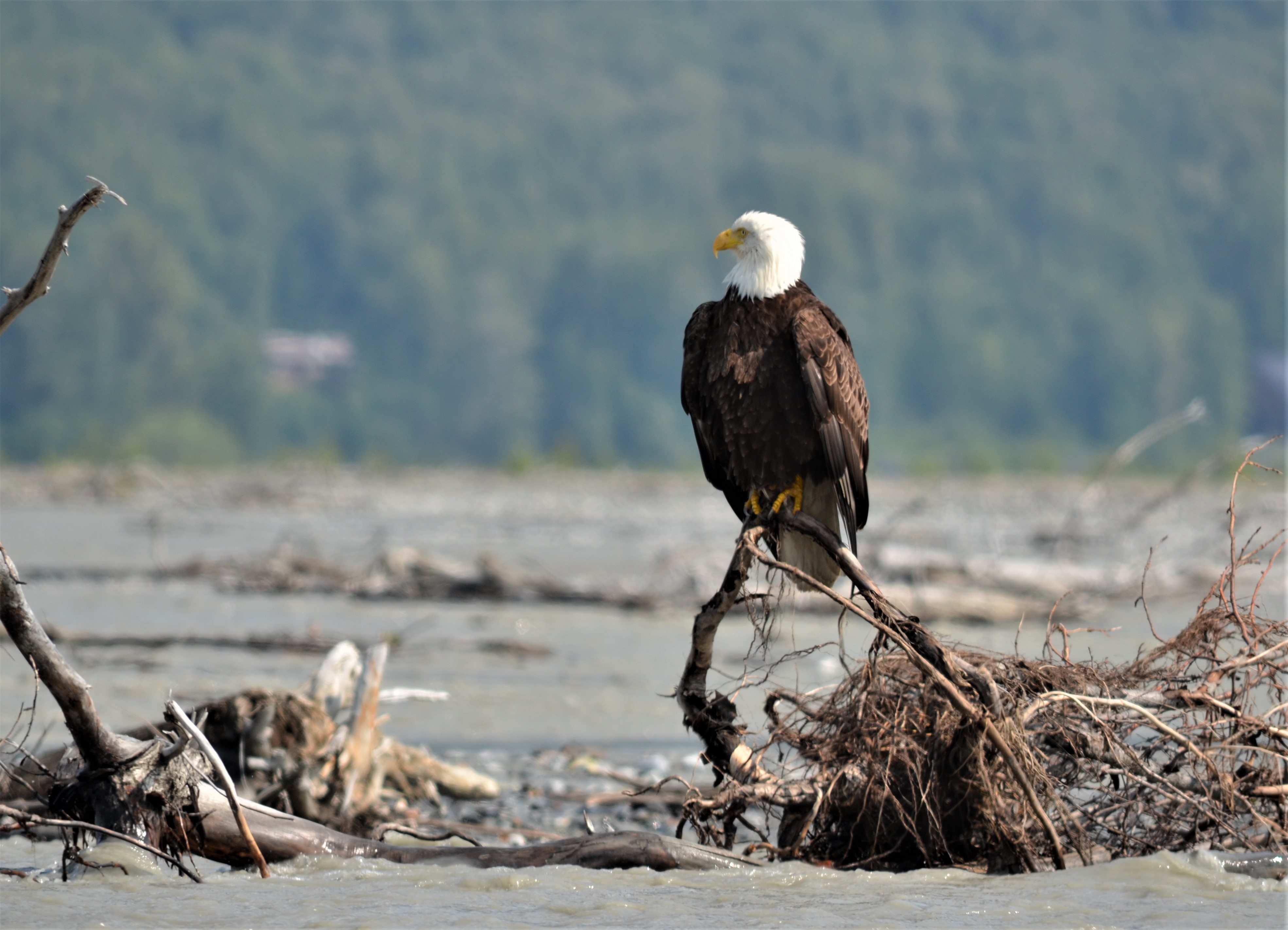
Bald eagles are probably best known for their taste for fish. Many a nature photographer longs to capture that perfect image of a bald eagle snatching a fish from the surface of the water. But despite their association with aquatic prey, bald eagles are opportunistic in nature, eating far more than fish when other items are available. In fact, in my state of Pennsylvania, bald eagles regularly feast on scavenged carrion during certain parts of the year, sometimes being exposed to toxic elements like lead fragments from spent ammunition in the remains of harvested animals. It turns out that bald eagles eat a variety of prey items, including other birds, as I witnessed on my most recent Alaskan adventure.
I just happened to be in the right place at the right time. Focused intensely on a massive glacier in front of me, I became aware of a particularly loud seagull just to the right of my field of view. Glancing over, I saw two bald eagles flying close together, with the boisterous gull directly behind, harassing them with force. This isn’t that unusual – gulls of many types are serial harassers, often chasing creatures much larger than themselves to deter them from taking their food or raiding their nests. Now the focus of my attention, the eagle pair would periodically swoop down and then up to avoid the nagging calls and nips of the shorebird instigator in heavy pursuit. Despite these evasive maneuvers, the gull remained persistent for several minutes, calling voraciously, jetting forward to poke at a tail feather, sometimes even ascending with a dive bomb from above.
And then, all of a sudden, both eagles tilted up just slightly, edging about 10 feet above the gull. Out of nowhere, in all of 15 seconds, one of the eagles turned, swooped straight down, and grabbed ahold of the pesky gull in mid-air. My mouth dropped. As soon as the eagle had the gull locked tight in the grip of it’s talons, it plunged the bird directly into the icy water below. After a very brief struggle under the water surface, the eagle used it’s powerful wings to swim to a nearby iceberg, where it promptly hauled the dead gull up onto the ice before enjoying a fresh snack out in the open. How quickly the tables turn…
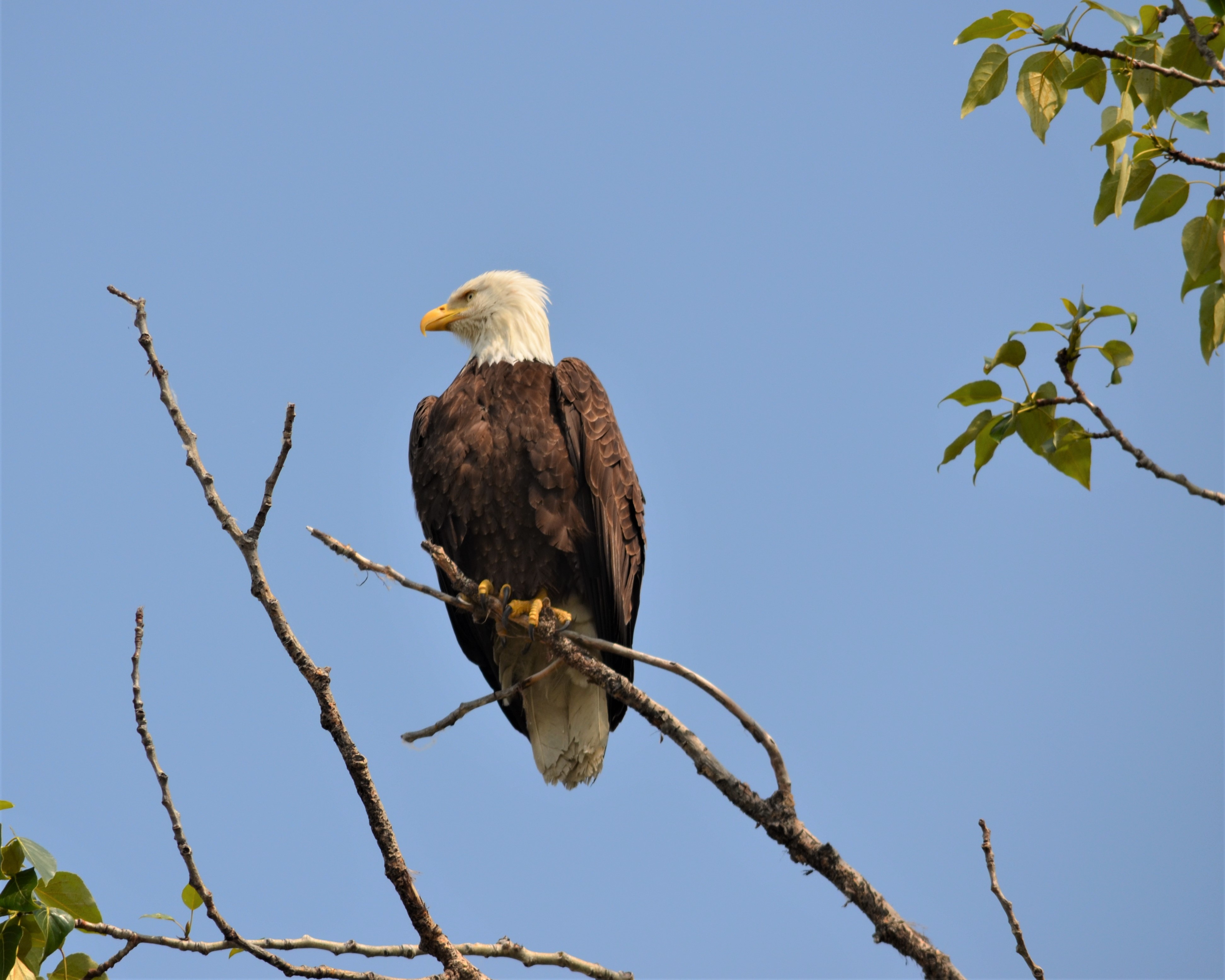
Although I personally think gulls are beautiful birds, there is no denying their pesky and persistent nature. Who hasn’t been harassed by a gull along the ocean (or in a parking lot) at some point? But the eagle friend I witnessed in this recent encounter demonstrated great wisdom in dealing with a persistent and menacing distraction. The lesson herein extends beyond those external preoccupations we all encounter from time to time. Instead, if you are like me, some of my most consistent and nagging pests are more often those voices of doubt and self-talk that I harbor on the inside. Sometimes I am my own irksome pest.
- You can’t make that happen. You will certainly fail. This isn’t going to be successful.
- It will be too difficult. What will others think? You aren’t strong enough for that.
- You aren’t going to be accepted. You’re just going to get hurt. What if you mess up?
- What if you are out of your league? What if you are rejected? What if you make matters worse?
You get the picture. On and on this churns through mental gymnastics…
I used to try to fight and suppress my internal self-talk, spending hours analyzing and processing and trying to understand it. While useful, it is exhausting work. And although I am thankful to have reached a point where the positive self-talk often balances out the negative – those pesky doubts still persist, nipping and squawking behind every move.
I’m beginning to accept those pests a bit more – at least to be more patient with them. I no longer wish to banish all questioning thoughts. In fact, sometimes the consistent nagging voice I’ve tried to shut down for so long can play an important role in helping me make prudent decisions. But, I’m learning not to give those thoughts too much space either. A time comes when they need to be shut down.
I sense my eagle friend knows this too. For the majority of the time that I watched the dramatic eagle-gull charade unfold, neither of the sizable eagles tried to fight their gull nemesis. Both persisted calmly, moving forward while staying focused, as the gull busily swirled around and around. But after letting the gull fly for a bit and taking note of it’s presence, one eagle decided it was time to put that gull to rest – swiftly, and with determination.
I’d like to learn to embrace my inner doubts in the same way. I can’t stop the thoughts from coming and it does me little good to try and wish them away. But what I can do is acknowledge and give them their space before promptly facing them head-on, taking charge of their influence, and using them to keep moving me forward instead of a crutch that forces retreat. As one of my childhood mentors used to say to me when I would lament over persistent and distressing thoughts of doubt – “you may not be able to prevent the eagle from flying, but you can stop it from making a nest.”
 Wisdom on Wings