During the summer months in northwestern Pennsylvania, I spend a good bit of time in patches of forest where I manage a bird banding station for the Institute for Bird Populations MAPS (Mapping Avian Productivity and Survivability) research program. I’ve walked miles and miles through this landscape of maple, ash, and oak over the past several years. These forests change drastically throughout the year – going from frigid and snow-covered stands of leafless toothpicks in the winter to vibrant and verdant nurseries of life in the summer. During the productive months of May, June, and July, there is constant movement and noise – from the tiny field mouse collecting seeds among the ground cover, to the swifts and swallows that chirp above the tree canopy. A walk in the woods can overload the senses.
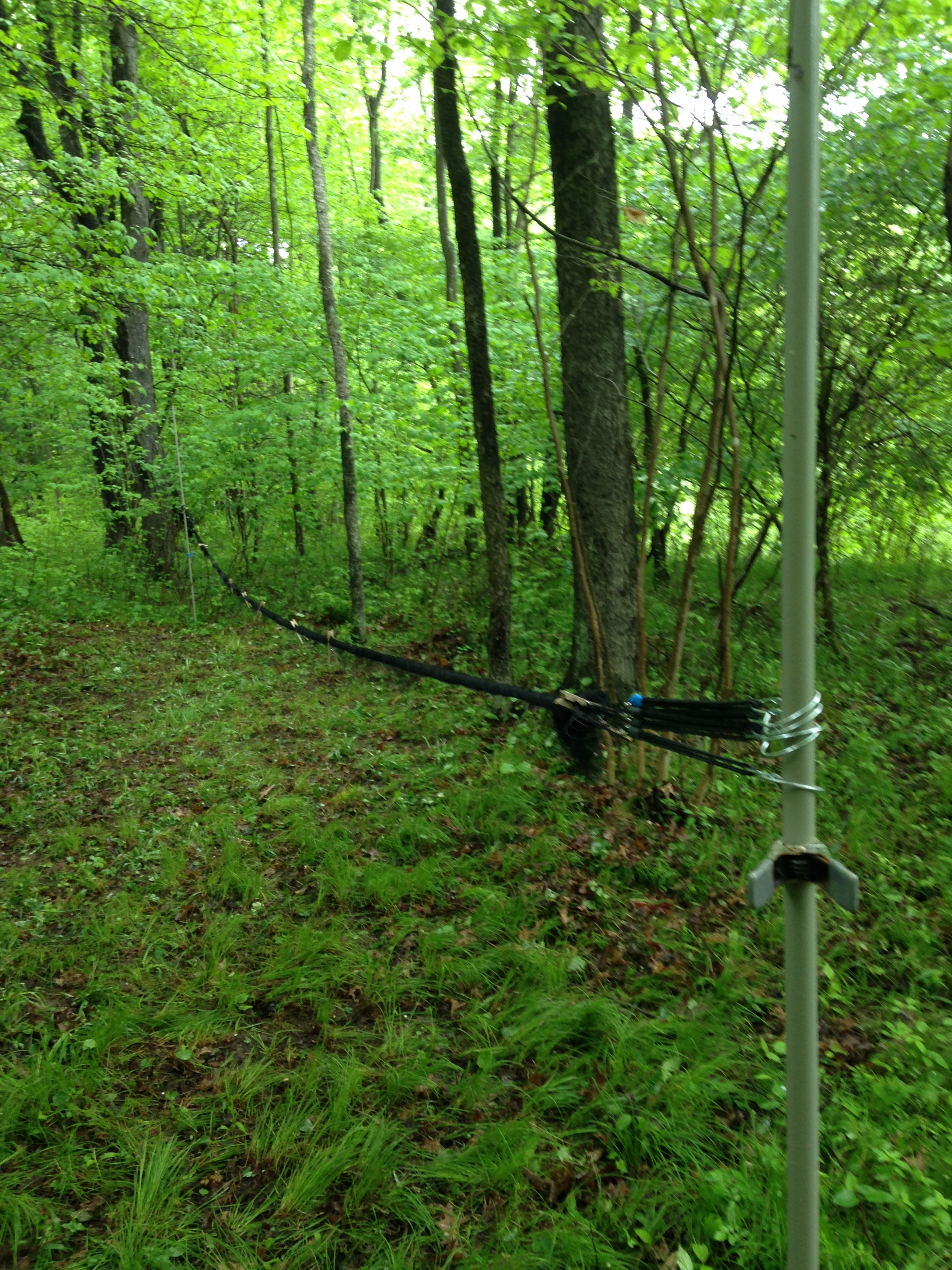
Amidst the swirl of summer business, each stroll in the forest forces one to make important decisions about where to direct focus and attention. There is far too much going on to take it all in at once. I’ve learned that, for me, my inner state of being plays a large role in this process. Perhaps unconsciously, I find myself making spur-of-the-moment decisions about where to direct my attention based on my mood on any given day. There are some days when all I can see around me are the troubling realities of a natural world in peril – the invasive multiflora rose choking native species, the disappearance of once common birds like the Ovenbird (seiurus aurocapilla), and the evidence of trees in stress from above-average temperatures.
All is not doom and gloom, however, and many days bring great joy. Sometimes, I am fortunate to tune in to the call of a soaring Bald Eagle (haliaeetus leucocephalus) nearby – a bird that has made an impressive comeback in Pennsylvania over the past 30 years. On the occasion that a previously banded bird is recaptured in the spring, I celebrate knowing that that bird once again successfully navigated a long-distance migration across a risky landscape spanning multiple countries. And who doesn’t feel a tinge of warmth upon the discovery of a newborn fawn resting quietly in the thickets? The summer can indeed be an exhilarating spectacle to witness in these forests if you can direct your attention towards the beauty therein.
Even still, there are those occasions that force me to make a choice about what I want to see. Not that I could literally change what is in front of me, but, in a figurative way, I am able to filter and frame the wild and wonderful world around me. Every walk in the woods allows decisions about what perspective to take.
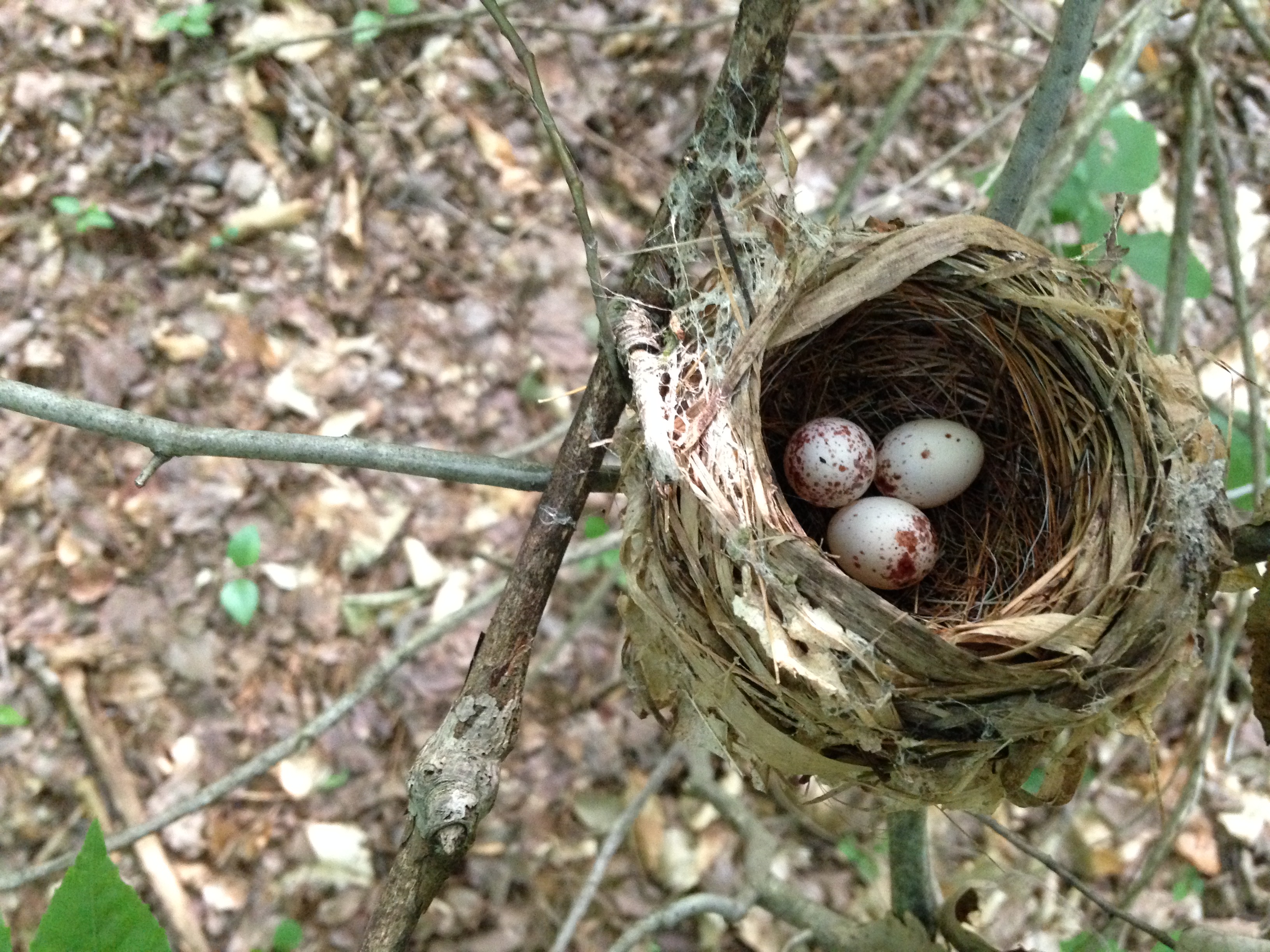
Take the Hooded Warbler (setophaga citrina) nest pictured here that I stumbled on about a month ago. In a literal sense, the little treasure in front of me was a small bowl of woven needles, sticks, and tree bark filled with three penny-sized speckled eggs. But to me, this tiny incubating apparatus three eggs full had all sorts of potential meaning. And herein lies the choice. What will I make of this discovery?
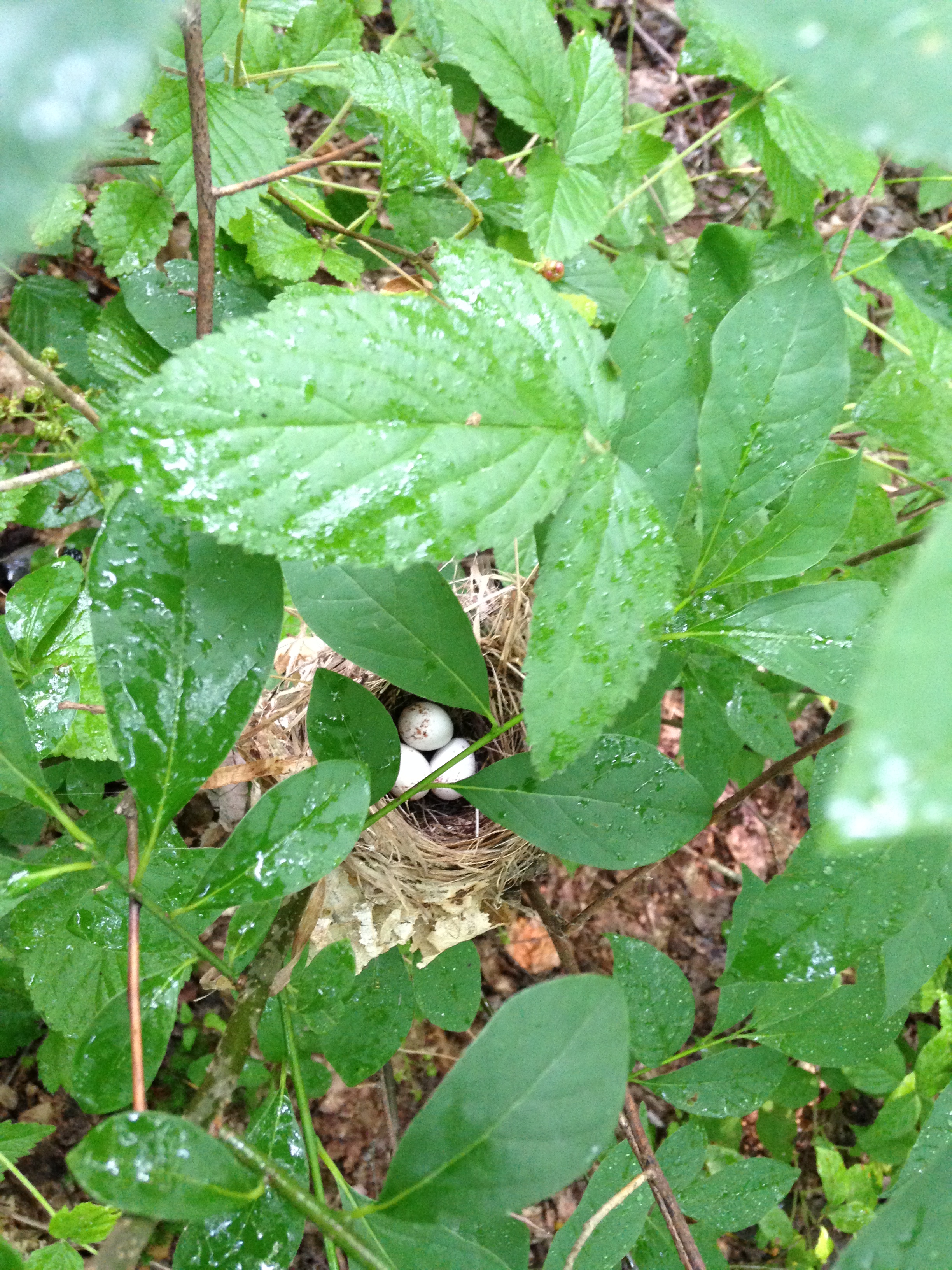
On the one hand, I know well the statistics on songbird nest success. Studies indicate that, depending on the species, anywhere from 60-80% of nests fail before chicks ever leave their comfortable nursery. A whole host of nest predators specialize in raiding eggs and baby birds – from snakes, to Blue Jays, to racoons. Among those lucky few that hatch, survive the first few weeks of life as a helpless nestling, and leave the nest to fledge, only 10-20% of juvenile birds will survive their first year of life to make it to maturity. There is no doubt that the world is full of peril for young and naïve songbirds.
If I so choose, I could peer upon each nest I discover with this reality in mind – a little inconspicuous reminder that the world is a dangerous and scary place. Sometimes, I admit, I can’t quiet those thoughts and voices. After all, our natural world is indeed under increasing threat and bird species are facing significant challenges – even beyond those navigated just to survive year-to-year. But on this most recent chance encounter with little soon-to-be Hooded Warblers, I felt something different altogether. I felt the promise of that clutch of three speckled eggs. After all, Hooded Warblers bring me much joy (see video below).
Inspecting them more closely, I found myself daydreaming about what it must feel like to break free from a cramped egg into a world full of new sights and sounds. How exciting it will be when the first flight feathers spring forth, with bright yellow richness, inviting the stretch of a wing along with thoughts of the magical flight that is to come. The curiosity piqued by the many sounds of the forest, the taste of each new insect, the scent of predators as they lurk in the shrubs below – so much to take in all at once! Further still, with a bit of luck, the many travel adventures that lie ahead – back and forth from breeding grounds in Pennsylvania to overwintering havens in Central and South America. Wouldn’t it be thrilling to be greeted by a vivid Toucan after touching down in the tropics in late fall? Once back in my neck of the woods, the birds contained in those eggs will become parents themselves, all along the journey being seen by bird enthusiasts near and far – from the experienced guide in Costa Rica to the young child just learning binocular use in Florida. What stories their lives might become – what potential these three little eggs embody!
While I am not always able to move past the visions of peril to see the budding potential in a nest full of eggs, it is good practice to try to do so. That is because the skill of seeing promise is especially useful outside of the forest. Take the many college students across the country that will be moving back to school over the next couple of weeks. Where I teach (Allegheny College), students have already started trickling in. For those that work in education, the return of students is a bitter-sweet occasion. There is no denying what it symbolizes – the end of the summer and the return to a hectic, demanding, and non-relenting schedule. There are all sorts of things that could go wrong in the school year ahead – any kind of failure is possible, and a whole host of uncertainties greet every new semester.
But as I’ve watched many of the young and vibrant faces of students transitioning back to our Allegheny community over the past few days, I can’t help but embrace feelings of potential here too. What opportunities, achievements, and discoveries may lay ahead for these young people? What adventures might I be a part of in that process? Like the Hooded Warbler eggs I encountered several weeks ago, the students I work with each semester will undoubtedly face a perilous world. Even still, I have to believe that among every one of them is a toolbox of potential to face that uncertain and intimidating landscape with new insight, courage, and energy – hatching fresh promise within what sometimes feels like the broken shell of a world.
 Wisdom on Wings