Most people that have banded birds for any amount of time know the feeling of nervousness when you approach a mist net and find several young birds all clustered in a tangled mess. This usually means you’ve got a family of fledglings that flew into your banding net at the exact same time. For banders, ensuring that each bird we encounter is handled and cared for with safety is our highest priority. We want to make sure that the birds in our care experience as little stress as possible. Because young birds are a bit more sensitive to that stress, we often work even more diligently to safely process these individuals first, hence the tinge of anxiety one feels when approaching a net that has several chirping fledglings vociferously yelling for mom and dad.
I remember one spring morning in Guys Mills, Pennsylvania when I came upon a net that had three young Wood Thrush in it. The Wood Thrush is one of my favorite birds, although their populations have steadily declined over the past decade. As such, every bird is important for the overall health of the species. I could hear the multiple help calls the birds were making as I approached the net and I knew immediately once I saw them that they had all three recently fledged their nest. I snapped a picture of one of them (below) after I had retrieved it from the net. Young thrushes like this one are typically easy to recognize due to their cream-colored spots that consistently pepper their newly formed feathers. Thankfully, all three of the birds I examined were healthy and eager to return to their new-found forest adventures.
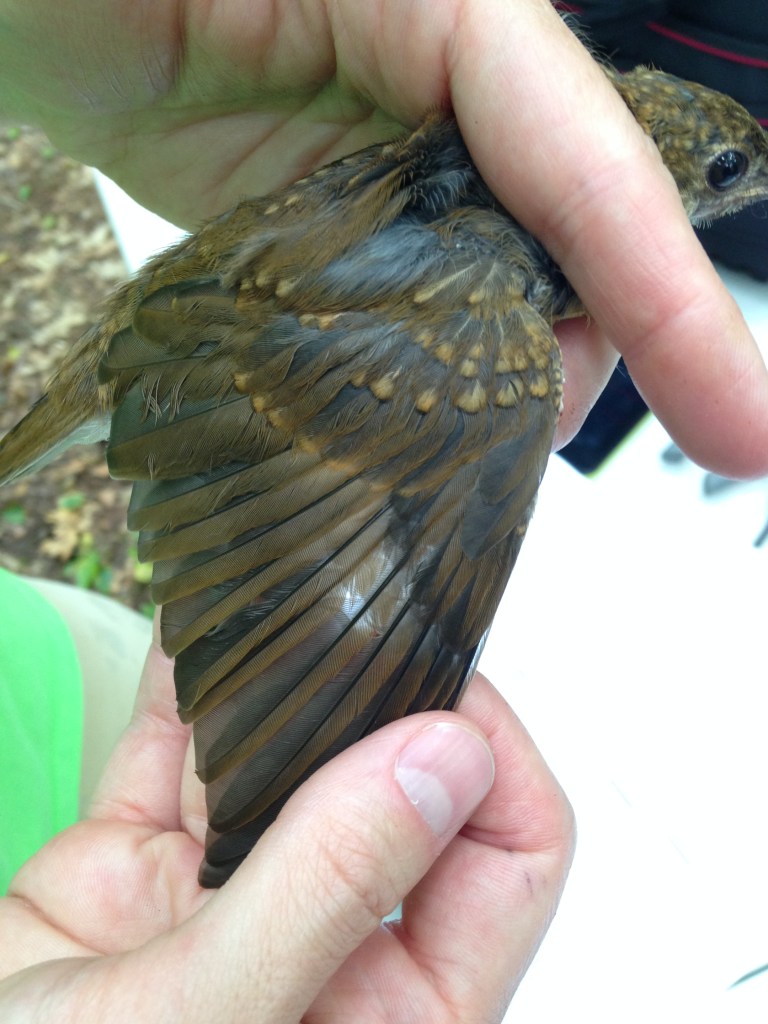
In the spring and early summer months, it isn’t unusual to capture clusters of young birds together in one net. Although we can’t know for sure unless we test their DNA, it is likely that many of these groups of birds are related, having fledged from the same nest at about the same time. Young fledgling birds of many species tend to stay together during their first several weeks or months away from the nest. There is good reason for these close connections, not the least of which is the safety that comes with numbers. But research also tells us that young birds maintain these close relationships with their peers for other reasons as well. Many sub-adult birds exhibit what we might consider to be play behavior, sharpening their motor skills and providing an opportunity to navigate the social systems and norms of their respective bird community.
For numerous species of bird, the playful interactions that help young fledglings learn how to “become a bird” fade as they reach full maturity. That isn’t to say that adult birds don’t play. There are a number of ongoing experiments around this question and there is already good evidence that certain species, like those in the corvid family, do exhibit play behavior even into adulthood. However, with the exception of those birds that flock together frequently or live in communal societies, many birds maintain a significant level of independence in adult life, aside from the time of year in which some pair up to mutually raise young. That is, the playful interactions that are more common among young, developing birds are much less likely as an adult.
Birds aren’t the only ones that demonstrate a decrease in play behavior that correlates with age. Hominids, members of the family Hominidae (like humans), demonstrate a similar trend for many of the same reasons. Play is critical for young hominids; those who are deprived of such opportunity suffer significant cognitive, physical, and social delays. Like birds and other animals, humans play less and less as they mature. Think about yourself for a moment. On any given day, how much time do you dedicate to play – those activities you invest in for the purpose of enjoyment and recreation rather than some practical or functional purpose? I am troubled to say that play is not at all a regular part of my day, often not even a regular part of my week.
It is no wonder, then, that we humans struggle to build and maintain deep and meaningful friendships as adults. Play is one of the very first and most effective mechanisms through which we build social bonds with others. Just ask any parent of a teenager who is experiencing conflict among a group of friends and the critical importance of such bonds is evident. The social bonds facilitated by play are the foundation for survival and success among any species with a complex social system. Beyond serving as a mechanism for social connection, play has also been linked to greater productivity, creativity, and problem-solving. And yet, adult humans do very little of it. While there are scant studies that have looked at play specifically, time-use studies on American adults indicate that, for those in my age group, the average person spends only 4 hours a day on what are considered “leisure” activities, with less than one hour of that time (not even 5% of the day) socializing with friends.
It isn’t much of a stretch to begin to see connections between the low amount of play most adult humans engage in and the growing concerns about isolation and loneliness that is increasing among those same individuals. Almost half of U.S. adults in a recent study expressed that they “sometimes or always” feel lonely. Adults are also reporting fewer close friends than they did just 25 years ago. And yet, both play and friendships are so very important for our mental and physical well-being. Research in public health indicates that people with strong social networks live longer, stay healthier, feel less stressed, are more relaxed, and report more satisfying lives. In fact, a recent study showed that friendships actually may play a greater role in our physical and mental health than romantic partnerships.
I don’t know how difficult it is for a bird to make a new friend, or even if they have much of a desire to do so as they age. I can only speculate that birds experience loneliness in the absence of close con-specific relationships much like humans do. What I do know, however, is that making friends as an adult human is not easy, by a long shot.
I’ve been thinking about this more lately given my recent move to South Carolina. I have lived in Greenville now exactly four full weeks and, to be honest, I miss my friends. I have been fortunate already to have met lots of wonderful people in that short amount of time, and I’m certain some of those will grow into deeper friendships, but that hasn’t happened yet and patience isn’t always one of my strongest qualities. The truth is that making friends takes time, but it takes effort too. Friendships don’t just materialize out of thin air, and, in our hyper-independent American culture, they may not even make the priority list for the majority of individuals. To be fair, I’m just as guilty as anyone else about not prioritizing time to recreate and play with my friends. Perhaps I’m even more negligent in my efforts to first try and make new ones, given the additional energy it takes to do so. Frankly, the process feels ever more daunting the older I get.
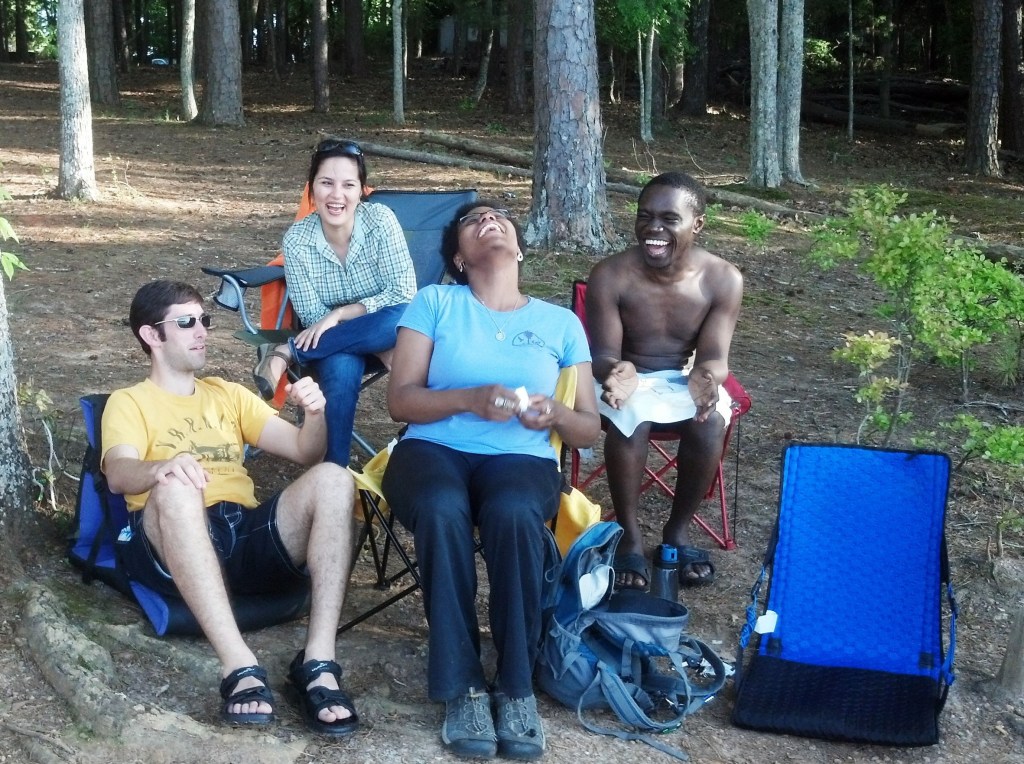
Now in my mid-thirties, I’ve grown a bit weary and somewhat less trusting of others as a whole, especially those I’ve just met. I’m also not as patient as I once was with other people and have solid personal tastes and preferences that are not as adaptable as they once were. And, I know how much it stings to lose and let go of friends, which, I’m afraid, has fostered a cautionary approach in my quest for new connections out of fear that the bonds I might build are one day, inevitably, likely to become fractured. Then there is this task of making the time, both for play and for friends. Unless I prioritize building friendships and giving myself permission to play, it isn’t going to happen. No one else is going to do it for me…
It could be much worse, of course. Technology allows me to stay in touch with rich friends all over the world. I’m lucky, too, that I have a canine companion who reminds me daily that play is essential. I am a much healthier, happier person because of it. But spending time with my dog, while certainly full of benefits, isn’t quite the same as connecting with another human. This recent move has reminded me of just how essential those relationships are – how much they impact our wellbeing. Much like the young birds that depend on social engagement for growth and survival, we too reap life-giving benefits from our friends. Now, more than ever, I don’t take that for granted.
 Wisdom on Wings