I was chatting with a good friend and her two young children via video conferencing recently when, as I often do, I asked if they had seen any interesting birds as of late. After all, despite the limitations that social distancing has placed on us, birds are still around, providing hours of free entertainment. “Yes”, her four-year-old answered, “we saw two cardinals and one crow”! That is typically the extent to which young children will indulge my avian curiosity. Provide a list of what has been seen and move on…
This time, however, once this budding naturalist had proudly rattled off his list of three birds, he got a quizzical look on his face and posed a thoughtful question. “Mr. Ben”, he said, “why don’t birds fall down when they sleep in trees”?
It’s a question I would often get in my Birds, Ecosystems, and People class, and I was lucky that I knew the answer. “Great question”, I said. “Birds are kind of magical because they have special legs and feet that lock onto branches when they sleep so they don’t have to worry about falling off. It’s kind of like when you use foot straps on your bike”, I added.
The use of the word magical was no exaggeration. The anatomy of the legs and feet of many perching songbirds is indeed pretty phenomenal. When a bird of this nature lands on a branch and bends its leg downward, a special group of tendons behind the leg running all the way from the underside of the toes to the muscle behind the top of the tibiotarsus bone (akin to the knee joint in a human) will automatically pull and tighten. Specifically, the flexor hallucis longus and flexor digitorum longus tendons are involved. As a result, the foot automatically curls and becomes stiff, locking the bird in place, even when sleep prevents the conscious control of muscles.
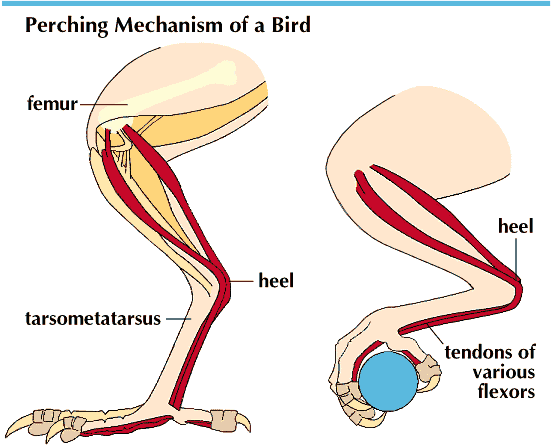
This turns out to be a handy feature for small songbirds, and not just for sleep. It is one of the reasons why a tiny bird weighing only a few ounces can hold tight to a minuscule twig or branch even through significant wind and storms. These birds have the amazing ability to anchor down and draw inward when danger is present or security is needed. In fact, this process is completely automatic – they don’t even have to think about it!
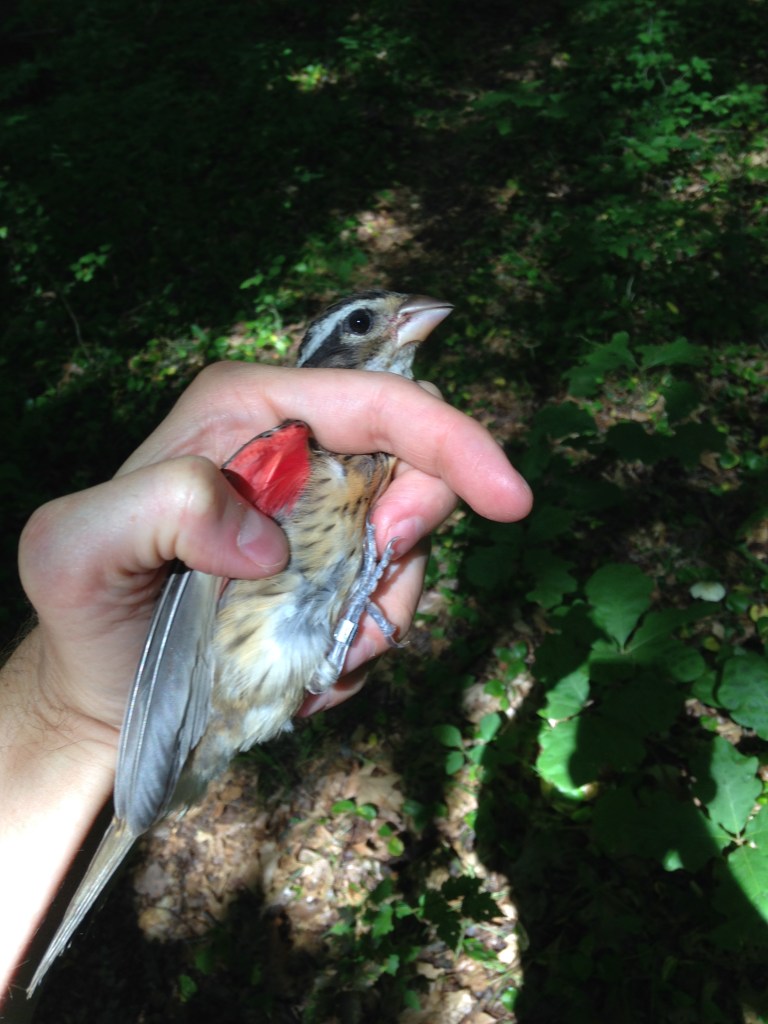
Although less automatic and more involuntary, many of us are also having to hunker down and search for an anchor of security amid the COVID-19 pandemic. The world is unsettling and uncertain. The everyday occurrences and routines we were used to have been halted. Our connections are limited, our future is not promised, and, for some, our livelihoods are at stake. I don’t know about you, but I’ve been looking diligently for an anchor in this storm.
To find that anchor, I’ve experimented with strategies that elicit security and comfort over the past several weeks. The world has gotten more closed all-of-a-sudden and fear is palpable. The isolation feels claustrophobic, with anxiety high. And so, I’ve tried to become more aware of the collection of activities that bring me calm and comfort so that I can practice some of them daily. So far that has included:
- Re-reading old children’s books (something about the Little Bear series, Doctor De Soto, Frog and Toad, and the Berenstain Bears is truly relaxing)
- Watching Disney movies (how can you watch the Jungle Book and not burst into song???)
- Catching up on PBS Nature episodes (even just the musical prelude to these episodes can soothe my spirit)
- Laughing hard at YouTube practical joke videos (the silly ones, where folks are caught off guard, and nobody gets hurt)
- Taking in an episode of Rick Steves’ European adventures while cooking a meal (there is nothing like preparing a pizza and dreaming of the piazzas of Italy!)
- Learning about animals (any animal – I’ve been fascinated by them all practically since I was born)
- Exploring nature right outside my apartment (especially feeling grass on my feet, listening to a gurgling brook after rain, watching the wind in the trees, and concocting stories about the clouds)
- Homemade biscuits with jam (do I really need to explain this one???)
- Sitting near trees (there is something about the dogwood or an old oak that brings forth great wisdom)
- Eating vegetables that remind me of summer (okra, tomatoes, and corn, oh my!)
- Cleaning (yep, I’ve found particular pleasure in vacuuming and cleaning windows as of late)
It is an odd list, I know – I’d be nervous to hand it to a psychoanalyst. In fact, I ask that you reserve judgement altogether – we are living through a pandemic after all! If you took a moment to create a list of your comfort activities, maybe you would find we have some similarities. No doubt your list would look different too.
For many of us, I suspect we would also include the strategies through which we’ve found to connect to friends and family as well. I didn’t include that here because I assumed it was a given. I have been fortunate to have the technology to connect with so many of my loved ones throughout our stay-at-home period. In fact, in some ways, this has forced me to be more intentional and more consistent about checking in. I so value those connections and interactions and am grateful that this time has reminded me of how many beautiful people I have in my life.
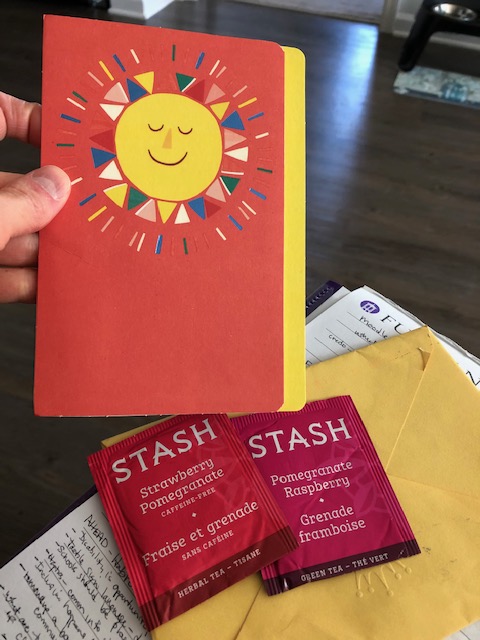
But I’ve also discovered that I can be a pretty good friend to myself as well. I can calm my nerves, encourage my spirit with optimism, take myself to global destinations full of adventure (through imagination), treat myself to culinary goodies, and assure those scared voices inside that things will be Okay. I’ve got the ability to do all of those things, and I know just how to do them (aka, the list above). It is interesting isn’t it, how sometimes the last person we think about being kind to is yourself?
Don’t call the psychiatrist just yet – I don’t think I’ve developed multiple personalities. I’m still the same old Ben. But I am learning how Ben can be kind to himself, how he can show himself some compassion, and how he can brighten his own day with a little sunshine. To be honest, I’ve had people suggest that to me for years, but I never really understood it, or embraced it, until now. It is a beautiful thing, to be one’s own friend.
Although my leg anatomy prevents me from anchoring to a tree branch in the way that my avian friends do, I think they are on to an important secret. When a bird needs safety and respite, it simply stops and draws itself inward for a moment. The anchor they need is already built inside – automatic, in fact. In modeling that approach, this particular human is finding much calm in our present global storm.
 Wisdom on Wings