One of the things I enjoy about any holiday season is observing the decorative prowess of friends, family, and neighbors as they add a bit of dazzle here and a pop of color there to spruce up homes, yards, and community spaces with celebratory flare. From glimmering hearts in February to heaps of pumpkins in October and twinkling menorahs in December, even the smallest decorations signify that something special is afoot.
Humans, or course, aren’t the only species to go the extra mile for a bit of festive decoration. Perhaps some of the greatest interior decorators of the bird word are the bowerbirds. This family of more than twenty species of birds are sometimes called the kleptomaniac love architects of the avian community. Found throughout Australia and New Guinea, male bower birds construct and decorate elaborate bowers (a shaded enclosed space) with a dizzying array of collected materials in hope of attracting a mate. I encourage you to peruse through images of these structures – a quick google search of “bowerbird nest images” will do the trick. These wonders are elaborately symmetrical and brilliantly colorful works of art. The beauty is breathtaking.
Unfortunately, holiday seasons can also bring out not so beautiful things. There is nothing like an upcoming holiday to foster a renewed commitment to one of the most significant and sought-after gods in American society – money. Some of the most celebrated elements of many of our contemporary holidays revolve around practices that reify and reinforce a capitalistic system built on constant growth, cheap and low-quality goods, and economic profit.
Profit and External Economic Consequences: A Brief (but relevant) Expose
Economic profit is the holy grail of American culture. In most contemporary economies, profit is made by accumulating more of the dominant form of currency (i.e., dollar, pound, yen, peso, or rupee) or items that could be exchanged for such currency. Someone “turns a profit” when they accumulate more capital by selling an item or providing a service at a higher rate than the inputs (costs) required to originally obtain, create, or develop that product or service. In economic terms, this is all about adding “value”.
[Warning: hang with me for a few more paragraphs – I promise I will return to birds…]
In economics, many of the market transactions required for a person or entity to profit financially have subsequent consequences or “spillover” effects called externalities. An externality occurs when some form of market transaction (the production or consumption of a good or service in exchange for a form of currency) results in a cost or benefit to a third party outside of that transaction. For example, when a member of a community receives an education (involving a transaction of knowledge for a cost), other members of the broader community will likely benefit from that transaction even if they did not incur the cost (e.g., let’s say a student of medicine later invents a medical breakthrough that saves thousands of lives). This is called a positive externality.
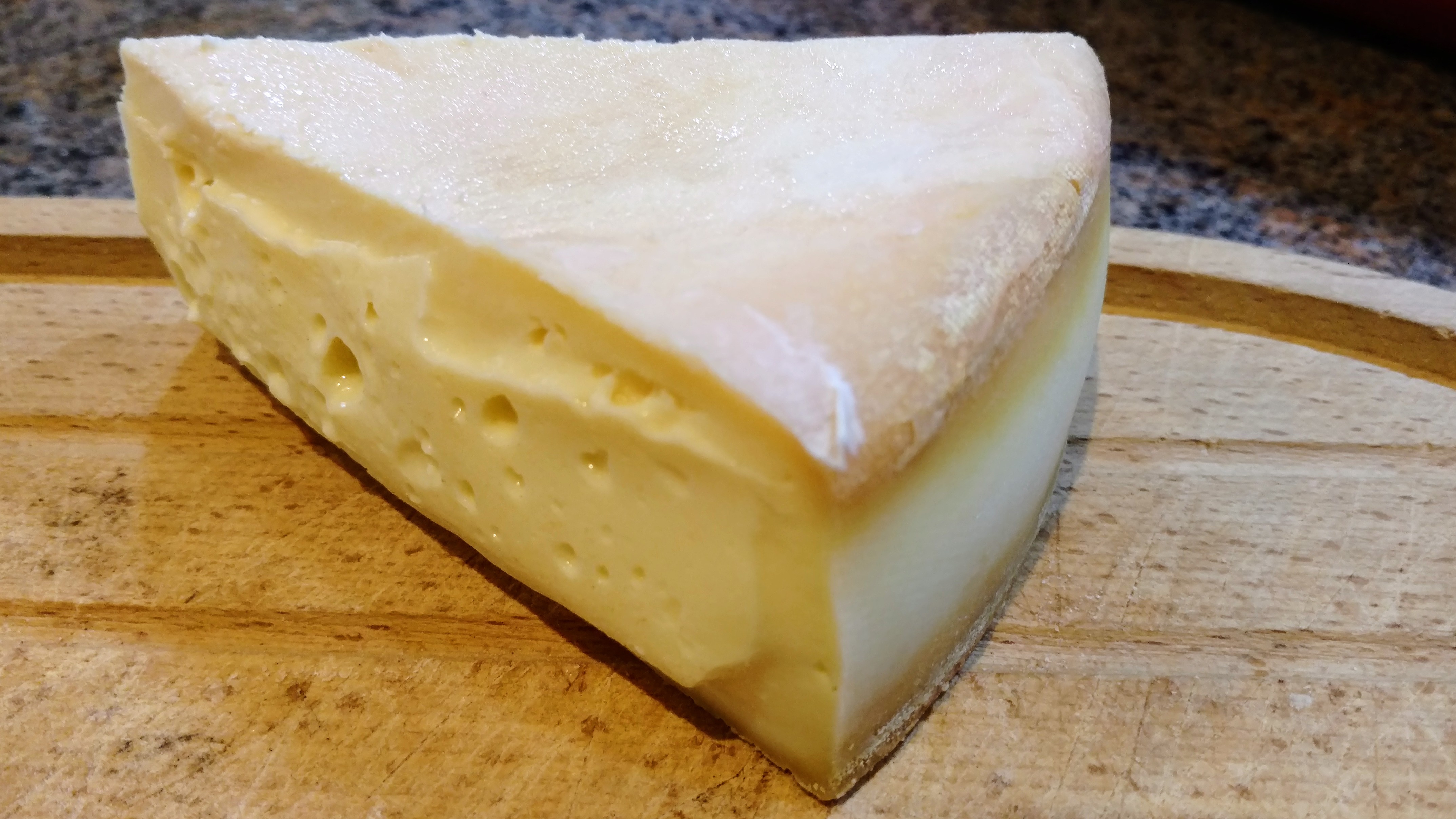
Let us imagine, however, that a member of another community decides to sell the most putrid smelling cheese (if interested, here are the top ten) by setting up shop in a local food court. This market activity requires a direct exchange of a product (cheese) for a payment by someone who has a hankering for stinky gooey muck. The costs of that transaction, though, extend beyond the direct exchange itself. All visitors to the food court will likely experience a negative externality in the form of a foul smell, although many of them will receive no benefit from the cheesy transactions. The cheese monger could make a substantial profit in this case (assuming there is indeed a large market for smelly cheese), but the cost to the community writ large could be severe, perhaps even resulting in real harm (e.g., the other food court vendors who no longer have customers because no one can tolerate the smell). To economists, negative externalities lead to market failures, which occur when the actual cost of a transaction doesn’t equal the real cost of that exchange to all of those impacted.
In a much more consequential example, this recent series of stories highlights an issue I have focused on a good bit over the past several years – unintended wildlife poisoning from the use of lead in hunting ammunition and fishing gear. As the articles highlight, a demonstrated negative externality exists for third parties when hunters elect to use lead ammunition in their pursuit of game (to be clear, an activity I support for subsistence). The real cost of transactions between lead ammunition purchasers and those that manufacture and sell it are born by others outside those transactions, yet are not reflected in the actual cost. A simple solution is available to mitigate the problem and yet a lust for nothing more than profit by gun and ammunition manufacturers overshadows efforts to address the issue.
Our Anemic Medium for Economic Profit
What is the point of this seemingly random tangent into economics? Simply put, I believe our currency is boring and, as outlined below, contributes to the degradation caused by our current economic systems.
In the U.S., folks tend to make profit by accumulating our dominant form of currency – the almighty dollar. More often than not, we exchange a product or service for a set amount of some form of moolah – bills, coins, banknotes, or an electronic funds transfer. We love the dollar so much in this country that we have developed a whole suite of nicknames for it – a buck, dough, loot, bones, smackers, or, my personal favorite, Benjamins!
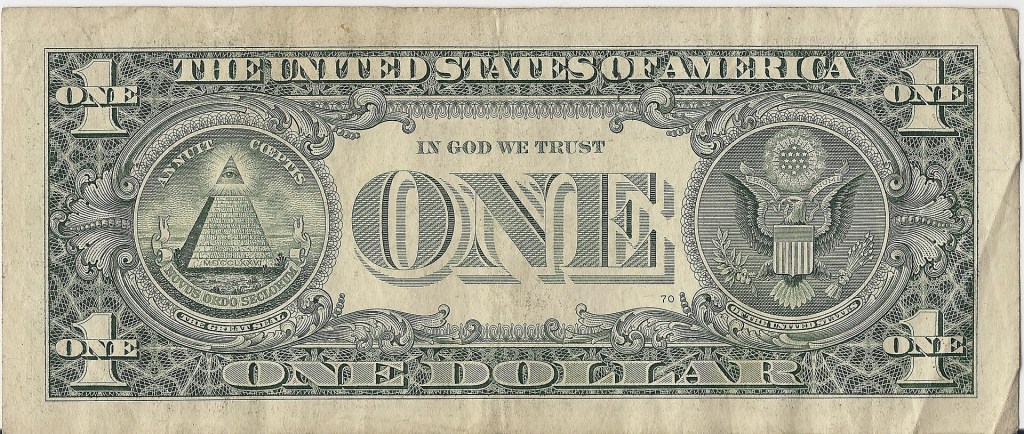
Yet have you ever stopped to think about just how uninspiring an actual dollar bill is??? I mean, we are talking about a dirty (really, really, dirty…) piece of paper with absolutely no practical value or durability. It isn’t even smooth enough to use as tissue or toilet paper in a crisis! Reflect for a moment about the color – would anyone argue that the particular hue of the U.S. dollar would ever top a person’s favorite colors list? There is a color called “baby puke green” that is about as close to the shade of a dollar bill as it gets. We profit in this country by accumulating hoards of crinkly, drab, germ collectors that we then exchange for some other item – with wildly varying external consequences to humans and non-humans alike.
Currency is simply a medium of exchange, or a proxy, for something of value. Historically, all sorts of things were used for that purpose – furs, hides, shells, precious metals, yes, even bird features! One difference between the dollar bill today and historical currency is that the U.S. dollar bill has very little actual or practical value (see above). Instead, the value is fully symbolic. Alternatively, furs can be used as clothing and metals fashioned into a useful tool; even shells and ceramic wares have great utility. Each of these items not only has an obvious usefulness, but the costs and consequences of their production are also much more evident (a fur clearly requires the death of an animal, for example). Isn’t it odd then that in our enlightened world we lust for an object that, in-and-of-itself, is useless, insipid, and duller than a bag of hammers? Although you could argue that we technically lust for the items we might eventually obtain by possessing the dollar, I aver that the medium on which all of that value is hinged is not insignificant either.
It is fair to point out that the form of currency used in an economy is a separate issue from that of the valuation of goods and services in that system – particularly with respect to how, why, or if both positive and negative third-party externalities are factored into the actual costs. But I wonder if there isn’t a connection worth interrogating here. I conjecture that longing for something as bland yet powerful as the supreme dollar might encourage us to be totally blind or indifferent to the real costs required to produce whatever it is exchanged for. American money is so metaphorically sterile that the relationships, responsibilities, and impacts inherent in most market transactions based on it somehow seem inanimate and lukewarm too. Perhaps the humdrum of the proxy fails to inspire a concern for the impacts of its use?
A Different Form of Currency?
Although it will not solve the challenges of negative externalities, what if our economic transactions revolved around a new, more rousing, currency – a currency of beauty?
I recognize that beauty is ultimately in the eye of the beholder. It is true that what one conceives of as aesthetically pleasing is influenced by both personal and cultural factors. But it is also true that research on the neurology of aesthetics suggests that humans have an innate “grammar” for recognizing beauty that mirrors the basic building blocks for human language. Some believe this is why there are certain sensory experiences (think sunsets, butterflies, and music) that have a more universal appreciation among humans regardless of cultural lens or personal interpretation.

Humans wouldn’t even have to agree about what beauty is to develop a medium of exchange that is fundamentally tied to accumulating a profit of beauty, whatever and however that is defined. Just think about what kinds of amazingly positive externalities might result from these transactions! Melodies in exchange for paintings. Hugs in exchange for hikes at sunrise. Dances in exchange for roses. Or more practically, melodies in exchange for peaches, hugs in exchange for plumbing, dances in exchange for transportation. I get a ride, you get a dance – and we both leave better off because of it?
It is probably clear by now that I am not an economist. I am under no illusion that a wholesale economic or monetary shift of this nature is likely. My musings may represent naivete and ignorance of economic theory and fiscal policy. But as I wrap up another calendar year and prepare for another, I can’t help but to think about lavishly alternative ways of being. How can we add more beauty to the world? How can we preserve the beauty that exists?
After all, if humans are indeed so evolved and special, why is the preposterous idea of a beauty currency so commonplace among other species of non-human animals? Let us return (finally!) to the bowerbirds. Bowerbirds dance, sing, and decorate with rich color and geometric shapes for the opportunity to fulfil a basic function among all sexually reproductive species – to mate. The currency of that transaction (the resulting bower) is itself a positive externality that delights many species far beyond its own (I would be stunned if you didn’t find the slightest delight in bower images). How different this is from the end result of the majority of human exchanges – products that were likely produced with great cost to others and a pile of baby puke Benjamins. No amount of dollar bills will ever equate to the exquisitely crafted lair of the bower bird.
Of course, birds have numerous forms of currency that they convert to some other type of value – food, feather condition, territory, etc. But many birds put a high premium on the currency of aesthetic beauty – just look at the peacock and the scarlet macaw or listen to the melodic tunes of the wood thrush. It is true that beauty in the bird word is a symbol of biological fitness. You could argue that a sizable loot of dollar bills is also a sign of fitness for a human, perhaps. Alas, I see no evidence that the possession of a large sum of dollar bills equates to any form of fitness – moral, emotional, or physical. In fact, I would be willing to wager that, more often than not, the opposite is true. It is certainly not the case that accumulating any sort of economic profit within our species guarantees a byproduct nearly as beautiful as a delicate bower. More often than not, death, destruction, and exploitation are the unfortunate collateral of an accumulation of the lifeless currency of contemporary society.

The bower bird reminds us that it is indeed possible to fulfill critical functions of life and meet our most essential needs while also bringing beauty into the world. It is a lesson that Frank Chapman, an ornithologist at the American Museum of Natural History and early officer of the then burgeoning Audubon Society, understood when he proposed a new holiday tradition in 1900 – the Christmas Bird Count. Until that point, it was common for friends and family to gather for a “side hunt” around Christmas each year to see who could procure the largest quarry of feathered (and sometimes furry) game. Although side hunts provided opportunities for social bonding and outdoor adventure (important human needs), alongside real economic profit for certain industries, they had a substantial consequence for our wild companions – largely for mere bragging rights. Chapman proposed that folks gather to search for, observe, and record birds instead of shooting them, maintaining the social interaction and celebratory gatherings while preserving the beauty of the very things that inspired those gatherings in the first place. Needs could be met and traditions preserved, yet beauty would not be diminished. The counts would eventually even drive economic activity among local outfitters and outdoor recreation suppliers. The Christmas Bird Count continues to this day, fostering countless interactions with the sublime.
Instead of destroying beauty to fulfill our needs and desires or to turn a profit, isn’t there a better way? I believe birds can help us find it. My hope is that whenever we next prepare to celebrate a special time of year, in lieu of exchanging a set of drab dollar bills for contrived, synthetic, limited-use objects, we think about creating a different kind of currency – the exchange of awe-inspiring beauty with one another.
In my neck of the woods, as yuletide commences today and we commemorate the “rebirth” of the sun, I hope to take a cue from the birds who teach us that bartering in beauty is far superior to bartering in bills.
 Wisdom on Wings
