Just this week two Eastern Bluebird fledglings emerged from one of the nest boxes I have in my backyard. Their diligent parents have been solely focused on their big world debut for nearly a month – first carefully constructing the nest, then patiently incubating the eggs, and finally frantically returning hour after hour to feed hungry little mouths of fluff. All of that work culminated when the two young proteges made their way through the one-inch hole at the top of the nest box this past Thursday to venture into a great, wide world.
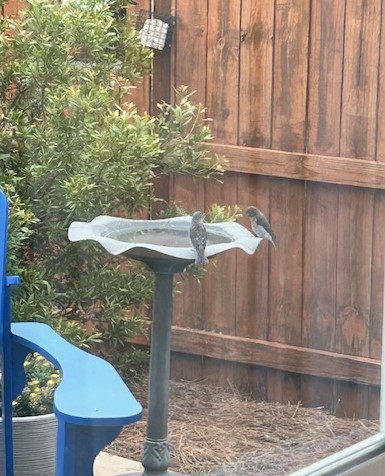
I have been watching the pair of birds that orchestrated this grand arrival for weeks now – putting out mealworms for them to eat, providing clean water in a nearby birdbath, and making sure that predators couldn’t get to their precious eggs. As much as I understand how precarious life can be for our wildlife neighbors, I still get super invested every time a pair of birds decides that my backyard is a safe space for them to attempt to bring new life into the world.
That is to say I allow myself to feel hopeful at the first sight of new nesting behavior each spring. My hope grows with intensity with every day and week that passes as I watch, and wait, and begin to imagine what kind of life those tiny little blue eggs might enjoy. What will they eat, what will they see, how far will they travel, and how many friends will they make along the way? Will they live for only a few months or will they live for many years? Will they know danger and misfortune or will they stay safe and protected? What adventures await them in their short few years of life?!?
But truth be told that hope comes with a substantial amount of risk. A cold snap could make it difficult for mom and dad to keep the eggs warm enough to hatch. An injury to even one parent would almost certainly lead to a failed attempt. Any number of predators would love a tasty bluebird egg for a snack. And this is all before the babies emerge from their precious shells! The potential that things could go south increases substantially once babies are outside of the nest. After all, most birds don’t survive their first year of life. I know this. I even study this.
My hope for those youngsters, their parents, and the potential lives they might live is propped up by a delicate patchwork of improbable and unlikely events. It’s a precarious choice. My hope, in other words, is highly vulnerable to disappointment. And frankly, I kind of feel like most hope is. Hope, it turns out, is a particularly vulnerable thing. Vulnerability involves being susceptible to physical or emotional harm or pain. It’s a dangerous world out there for a baby bird, even in my small fenced-in backyard sanctuary.
But who am I kidding? Baby birds aren’t the only ones that face threats, fear, and uncertainty in the world we live in. No, a host of physical and emotional risks await human and non-human animals the world over. There are the obvious and all too present vulnerabilities we humans face of famine and flooding, war and genocide, abuse and discrimination. But there are also the not-so-obvious and often more private vulnerabilities to the pain of illness, the loneliness of loss, and the sadness of disappointment. To live is to be vulnerable – it is just a fact of life.
In the face of such risk, most of us run from vulnerability like it’s the plague. It doesn’t feel good to be vulnerable – the uncertainty, unpredictability, and fear it brings. With so much vulnerability already baked into our natural, social, and political systems, why would anyone choose to put themselves in a situation where there is potential, maybe even where it is likely, that they would be exposed to pain by the actions or decisions of someone or something else?
The truth is that many people choose to avoid this hazard at all costs. Sometimes hope is just too far of a stretch. And I get it, I really do. There is no judgement here if that is your choice too. Brene Brown, a well-known professor, speaker, and social science researcher, has found that most people tend to push away vulnerability. For many, it just isn’t worth the emotional risk it carries. And yet, and here is the kicker, Brene has also found that vulnerability is an important and powerful pathway not only to deep connection with others, but also to creativity, fulfillment, and joy. It turns out that being vulnerable and experiencing joy have a particularly strong link. Brene asserts that many people rob themselves of joy to avoid vulnerability even though much of her research shows that embracing vulnerability is often a prerequisite for deep and abiding joy.
In her book, Daring Greatly, she says:
“Vulnerability is not weakness, and the uncertainty, risk, and emotional exposure we face every day are not optional. Our only choice is a question of engagement. Our willingness to own and engage with our vulnerability determines the depth of our courage and the clarity of our purpose; the level to which we protect ourselves from being vulnerable is a measure of our fear and disconnection.”
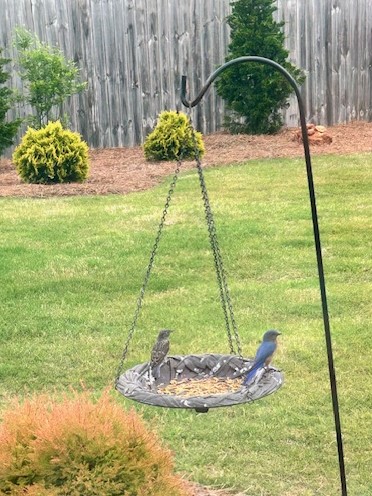
If I am honest, there were many times over the past few weeks when I wanted to detach and disengage from the Bluebird saga playing out in my backyard for fear of how the story might end. If I don’t care, if I don’t invest, I thought, then I can’t be disappointed when the eggs don’t hatch or the little ones don’t make it. To be sure, I could have saved myself the potential for a good bit of sadness and pain had I taken this route. I am well aware that both of the fledglings I am watching as I write just now may not make it for more than a few days.
And yet, the joy that I felt when two healthy, curious, life-affirming baby birds appeared at my birdbath earlier this week was the stuff that I live for. It is the stuff that makes the harsh realities of our world bearable. It is the stuff that gives me just enough strength to do it all over again, waking up tomorrow morning in search of a new nest, or opportunity, or spot of goodness to believe in.
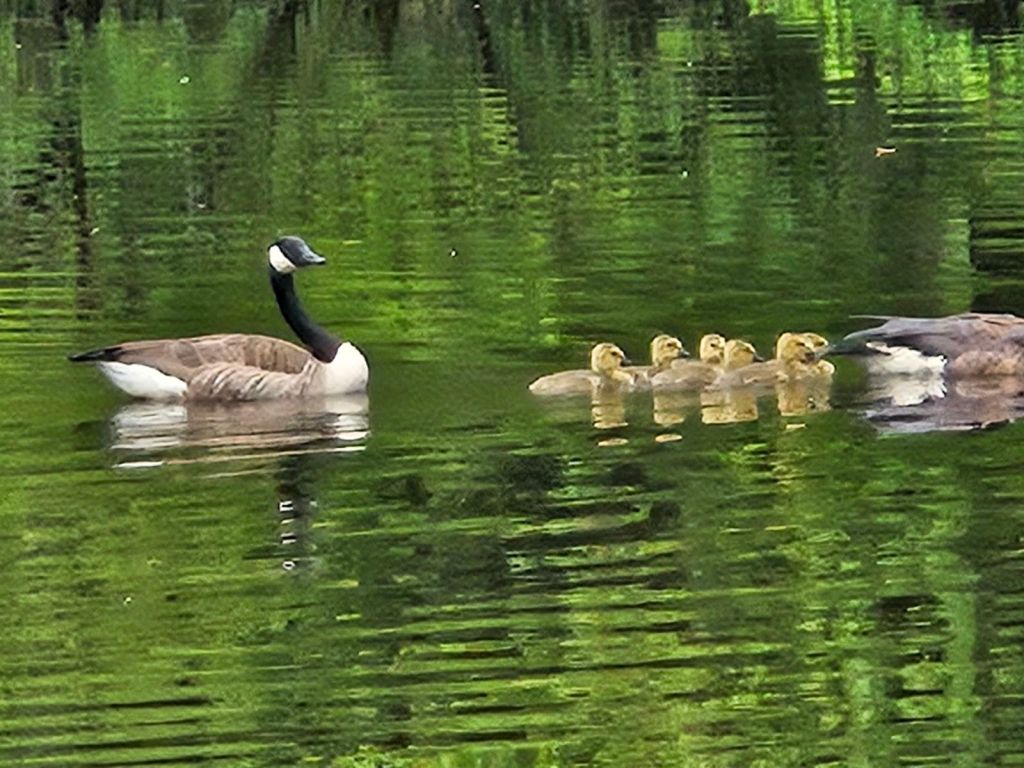
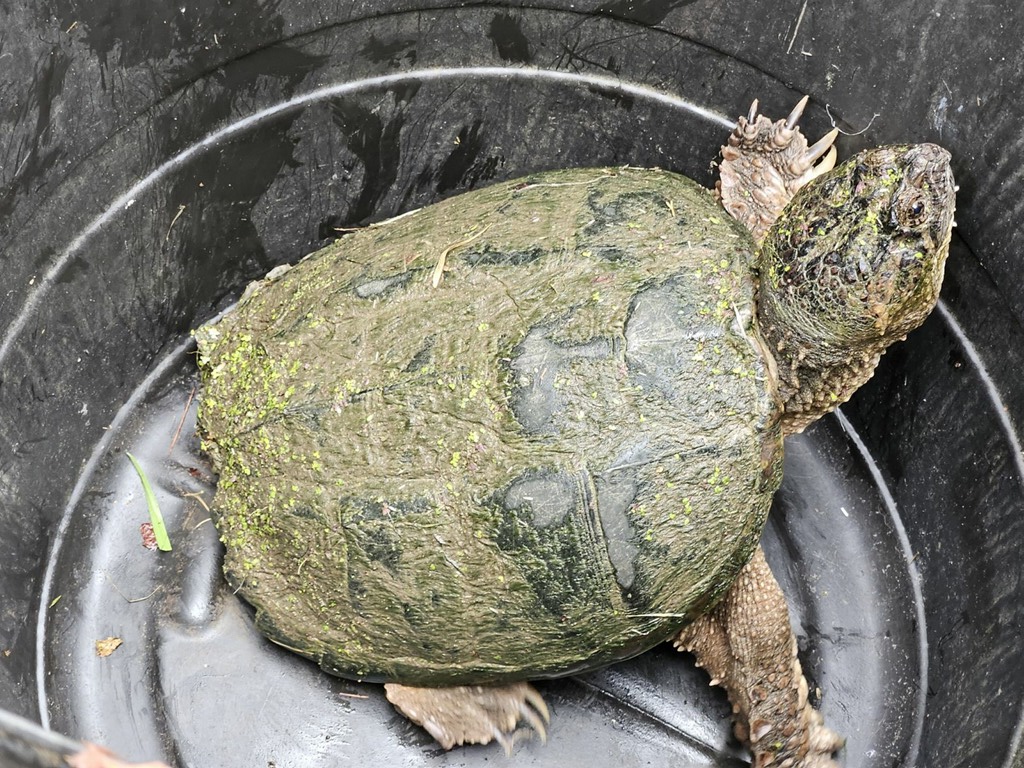
I have had some wise teachers in my life that have modeled the courage it takes to lean into the vulnerable wilderness of hope. In fact, another avian saga was also playing out this week on the pond next to the homeplace where I grew up in North Carolina. My mother and stepfather had been watching a goose hen sit on a nest by pond’s edge for about a month – checking on the dedicated parents daily, chasing off curious snakes, and relocating hungry turtles with the hope that new life would break through a thin layer of eggshell and brighten up a small little corner of the world. Defying potential misfortunate, and despite the risks, seven goslings emerged just days ago, making all that uncertainty and fear, at least for a moment, completely overshadowed by joy.
Yes, hope is a very vulnerable thing. It comes with no guarantees and zero insurance policies. Sometimes it is met with disappointment, grief, and loss. But sometimes, against all the odds, it hatches great joy and beauty too.
 Wisdom on Wings